
Chapter Four · Findings
The thematic framework
Six themes, thirty codes, and participants’ own words — as reported in Chapter Four.
AI-generated conceptual illustration · Not research evidence or a real study site
Technology Enables Data Storytelling and Data Communication
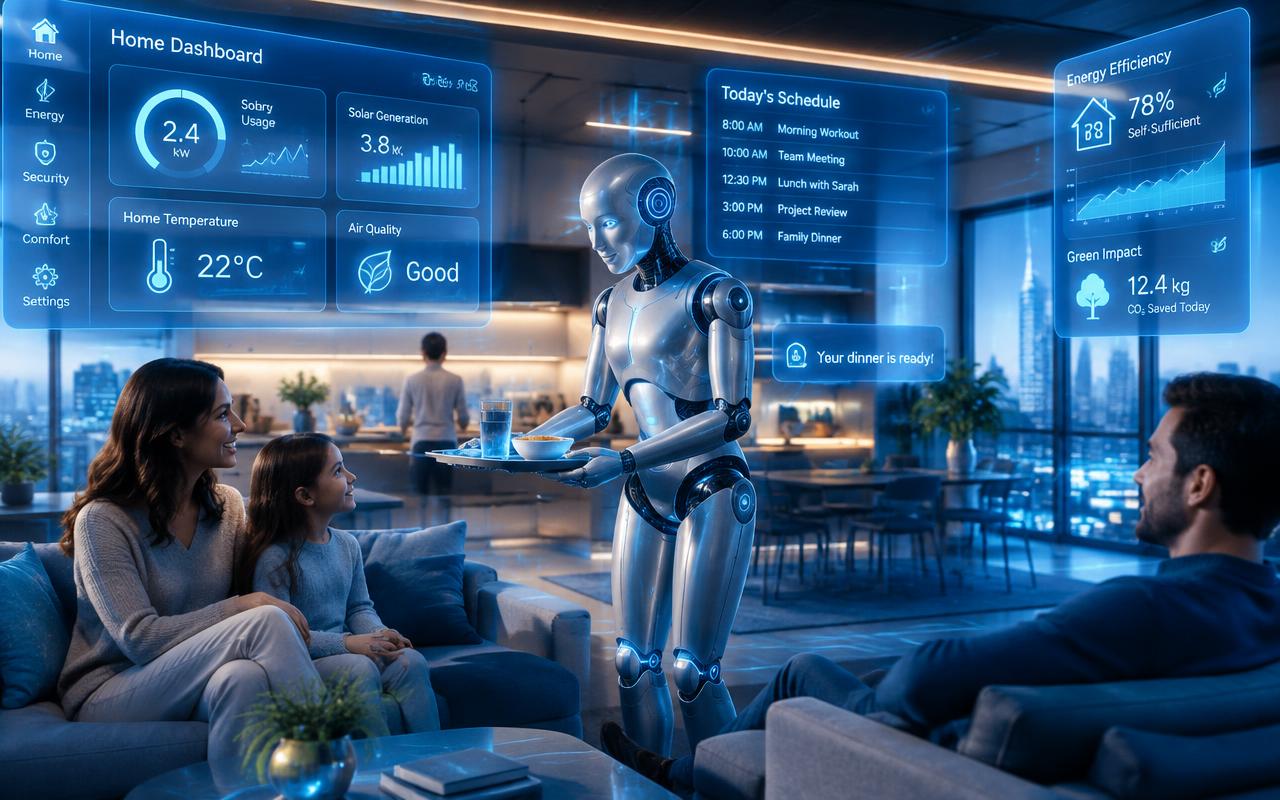
Reported as a supplementary finding: the enabling technological infrastructure underlying RQ1 and RQ2. Eleven of twelve participants named specific tools — Jira, SharePoint, Excel, Monday.com, Tableau, Splunk, Power BI, SAP, Oracle, ERP systems, a mobile shop-floor reporting app, and proprietary observability platforms. Dashboards were the most universally named artifact.
Research question
Supplementary (enabling condition for RQ1 and RQ2)
Strength of evidence
Strong (ERP and AI: Emerging)
Codes
Key findings
- P8 remained a notable exception — no direct access to any computer-based data system, receiving information exclusively through verbal briefings: a digital divide within the same workforce, treated as a meaningful finding in its own right.
- ERP systems were discussed by seven participants; P2 called SAP and Oracle “the gold standard within the industry.” P11: “ERP works only when the information entered in the system is accurate.”
- AI adoption varied markedly: actively embedded (P1’s team-level AI agent for Excel; P3’s AI-assisted insight platform), recently introduced and access-restricted (P7’s Copilot), anticipated but not yet adopted (P5, P12).
- P3’s first-hand evidence of AI generating narrative, not merely charts: “give them the instruction to AI, hey, give me detailed storytelling. It tells you exactly like, hey, your sales are high in this region.”
- The verification caveat, from P9: “I wouldn’t automatically trust an AI-generated explanation without checking the original data.” P10 echoed it: “I would still want the original data validated before making an operational decision.”
- P3’s qualification: AI without supplied business context produces only generic output — “it tells you a lot of the obvious.”
Divergence, preserved — not smoothed
AI relevance is limited to the five participants (P1, P3, P7, P9, P10) who described direct current use. P11 explicitly disclaimed meaningful AI use, describing rule-based color-coded status indicators instead; P12 anticipated a future use — pattern detection across repeated shortages — rather than current use. Reported as emerging, not established.
Added scholarly interpretation
Why this theme matters
Technology is an enabling condition, not the source of meaning. AI can draft a narrative, but humans must supply operational context and verify it against original evidence.
Proposed design implication · not tested
For a conceptual AI-assisted workflow, retain source figures, label generated text, record human review, and provide accessible alternatives for employees without system access.
Boundary of the claim
AI is emerging and supplementary in this study; direct-use evidence is limited. The GENIOS demo is illustrative, not an evaluated intervention or evidence of dissertation outcomes.
In their words
“Once you use it a few times, it becomes part of your normal work process.”— P12
“Sometimes I can look directly in the system, but sometimes I depend on someone explaining what the numbers actually mean.”— P9
“If you do the prompts right and give them the instruction to AI, hey, give me detailed storytelling. It tells you exactly like, hey, your sales are high in this region, you can… expand more on this on this channel.”— P3
“The interesting thing is what the context you need to give it, right? And the domain knowledge that you need to give it… it tells you a lot of the obvious.”
“I wouldn't automatically trust an AI-generated explanation without checking the original data.”
“I think AI can be useful for finding patterns or helping communicate information, but I would still want the original data validated before making an operational decision.”— P10
“I could see AI being useful in the future for identifying patterns — for example, if the same part keeps being reported as missing or if certain shortages happen repeatedly.”
“SAP and Oracle are this gold standard. They're just the gold standard within the industry.”— P2
“ERP works only when the information entered in the system is accurate.”— P11
Answers to the research questions
How do frontline employees and managers perceive the role of data storytelling in enhancing employee engagement within supply chain and operational environments?
Participants perceived data storytelling — the addition of context, cause, and consequence to raw operational figures — as associated with increased engagement, while raw or unexplained data was associated with confusion and, in one severe case, costly organizational error. The perception was strongly but not universally shared: P4 described an organizational culture in which storytelling was largely absent.
Drawn from themes 02, 05, 01, 03
How does narrative visualization influence employees’ trust, understanding, and interpretation of operational data?
Narrative visualization’s influence depended on the fit between visual form and data structure, the presence of accompanying explanation, and audience-specific tailoring. Transparency about data limitations was the most consistent trust-building practice; its absence — particularly deliberate omission — was the most serious threat to trust. P8’s categorical rejection of visual formats, set against P9’s affirmatively positive account, showed that fit, not frontline status, is what the evidence differentiates.
Drawn from themes 04, 02, 03, 05
Strength of evidence reflects the consistency, richness, and specificity of participant evidence across the twelve interviews, not participant count alone. Findings are participant perceptions, not statistically generalizable or causal claims.